An automatic litter box should fit the cat who uses it and the person who empties it. That sounds obvious until a roomy waste drawer comes attached to an entrance your older cat struggles to climb. We recommend the Neakasa M1 Plus for larger cats and shared households. The UBPet C41 gets our vote for easier entry. The PETKIT Purobot Max Pro 2 suits an adult cat comfortable with an enclosure. Here’s how we would choose.
Contents
- Which automatic litter box should you choose when cats share the bathroom?
- A larger cat needs an automatic self-cleaning litter box with room to enter
- For a senior cat, the litter box entrance matters more than the waste drawer
- An enclosed automatic litter box suits an adult cat accustomed to a covered box
- Choose a self-cleaning litter box you can empty, carry, and clean in your bathroom
- Frequently asked questions
- Which automatic litter box should I choose for multiple cats?
- Which self-cleaning litter box is better for a senior cat?
- Can a kitten use the PETKIT Purobot Max Pro 2 in automatic mode?
- Which model lets me use standard trash bags?
- Should unit weight decide which automatic litter box I buy?
Which automatic litter box should you choose when cats share the bathroom?
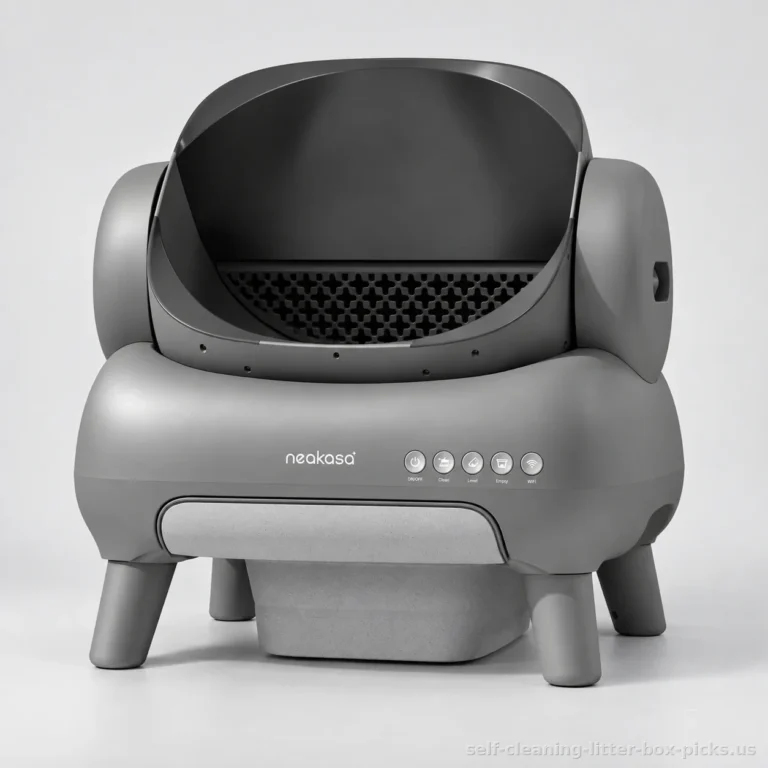
A household with multiple cats gives a litter box plenty of work. Think of the evening procession: a bathroom stop, another cat waiting nearby, and you hoping the waste drawer can wait until after the laundry. For that situation, our recommendation is the Neakasa M1 Plus. Its combination of an open format, room for larger cats, and a substantial waste compartment makes it our choice for a shared household.
The Neakasa M1 Plus for shared households has a waste capacity of 11,23 L, the strongest result among these choices. That means more room to collect waste before the drawer fills, a useful advantage when household cats take turns in the same box. Across our broader selection, waste capacities run from 6 L to 13 L. The drawer matters more than a long feature list if emptying it is the chore you most want to reduce.
Keep that advantage in perspective. Waste drawer capacity does not establish how many days it can go without emptying: that depends on the number of cats and the litter used. A larger compartment gives you breathing room, but it does not write your weekend plans. If a neighbor feeds the cats while you are away, include checking the drawer in the care instructions.
The removable waste bin makes emptying part of a straightforward maintenance routine. Compatibility with standard trash bags also matters here: you can organize supplies alongside the household trash bags instead of building a separate stash just for the litter box. We like that practical combination because it simplifies a chore you will keep doing.
There is a significant catch. The entrance stands at 35,2 cm, a high step for a senior or stiff cat. Avoid this choice if climbing into the box is already difficult. We would pass over the PETKIT Purobot Max Pro 2 for this shared-household brief. The UBPet C41 is also a poor fit when multiple cats make waste capacity a priority. The recommendation here rests on room for the cats and room for their waste.
A larger cat needs an automatic self-cleaning litter box with room to enter
A large cat should not have to negotiate a bathroom entrance as though squeezing behind the sofa. Start with the animal’s size, usual posture, and current litter box habits. An enclosure that looks tidy beside the vanity can still be the wrong format for its intended occupant. For a larger cat, we would choose the Neakasa M1 Plus, provided the entrance height suits that cat’s mobility.
Its open, XXL format is intended to accommodate larger cats. The maximum cat weight is 15 kg, which gives you a manufacturer limit to compare with your cat’s weight. Minimum and maximum cat weights are manufacturer limits: never say “suitable for all cats”. Size compatibility is a starting point, while the way your cat approaches and enters a box remains central to the decision.
The open Neakasa M1 Plus also has a litter tray capacity of 7,17 L. Think of that as the amount of litter the tray can hold, separate from the waste drawer. Those compartments do different jobs. A generous waste drawer can reduce how often it fills, while the litter tray still needs attention as litter is used and replenished. Automatic cleaning does not turn either compartment into an endless supply.
The PETKIT Purobot Max Pro 2 has a maximum cat weight of 10 kg and is designed for most adult cats. Its enclosed format makes it our choice for a different household profile, rather than our recommendation for a larger cat. If extra room is the deciding requirement, stay with the open XXL option.
Across the broader selection, maximum cat weights extend from 10 kg to 15 kg. That range helps explain why “automatic” alone tells you very little about fit. A motor cannot change the entrance or the step your cat has to negotiate. For a large cat with stiff joints, give entry difficulty priority over the appeal of a roomy format. The Neakasa M1 Plus is our large-cat recommendation, but its high threshold is also the clearest reason to reject it.
For a senior cat, the litter box entrance matters more than the waste drawer
When your cat pauses before stepping into the litter box, convenience changes meaning. The priority becomes making the bathroom trip easier, even if you empty the waste compartment more often. The UBPet C41 is our recommendation for a senior cat because its lower entrance addresses that specific difficulty. It is a choice grounded in access, rather than a promise that automation can solve every problem associated with aging.
The entrance threshold on the UBPet C41 for senior cats is 20,3 cm. In practical terms, that is a lower obstacle for a cat to step over. Entry heights across the broader selection range from 20 cm to 35,2 cm. If your cat already hesitates at a tall rim, this measurement should move ahead of waste capacity on your shopping checklist.
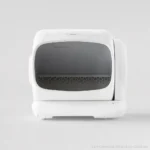
The compromise is clear. The UBPet C41 has the smallest waste compartment among these choices at 6,7 L, with a noticeable gap from the largest. Expect frequent emptying, especially when multiple cats use the box. We would avoid it for a household whose main objective is stretching the interval between drawer visits. For an older cat living alone, easier entry can be the more useful benefit.
Its usable interior volume is 106 L. Treat that as interior space, separate from the measurements needed to place the machine in your bathroom. The exterior is 50,8 cm wide, 63 cm deep, and 57,1 cm tall. Give the entrance a clear approach instead of squeezing the unit into a gap that forces your cat to turn awkwardly before stepping inside.
We would rule out the Neakasa M1 Plus for this senior-cat brief because of its high entry threshold. A large drawer is a poor consolation if the cat finds getting inside harder. The UBPet C41 also has a removable waste bin, so its more frequent emptying remains a defined household task. That is the trade we would accept: an easier step for the cat, a more regular drawer check for you. The cat gets the better end of that arrangement, which seems reasonable.
An enclosed automatic litter box suits an adult cat accustomed to a covered box
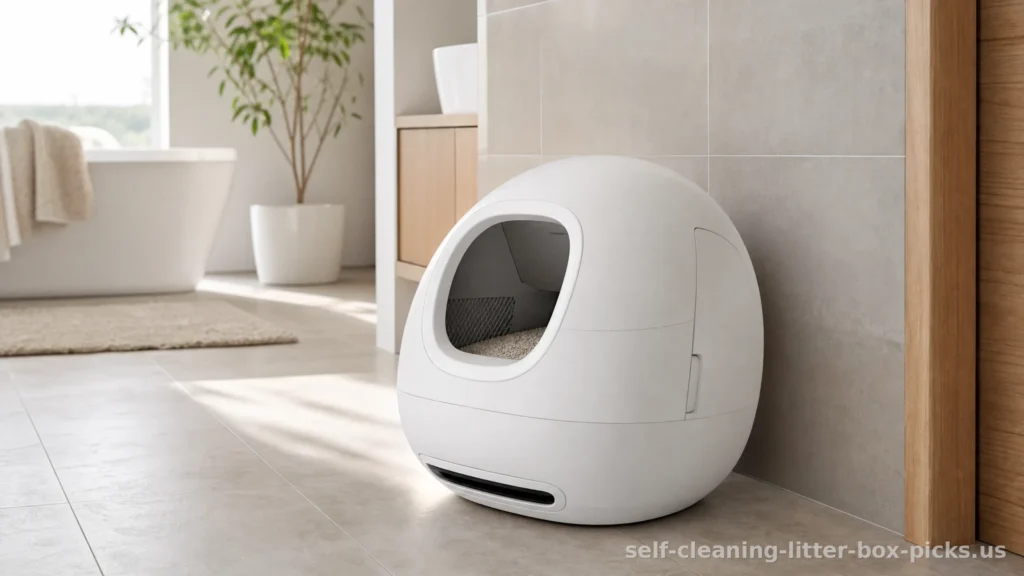
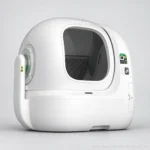
If your adult cat willingly uses an enclosed litter box, the PETKIT Purobot Max Pro 2 is the choice we would put first. It sits among the strongest overall options in our selection and combines an enclosed format with a removable waste bin, an airtight waste compartment, and a detachable globe. Choose it for an adult cat comfortable with enclosure, rather than because its exterior happens to suit your bathroom.
The enclosed PETKIT Purobot Max Pro 2 has a manufacturer minimum cat weight of 1,5 kg and a maximum of 10 kg. Those limits place it around the needs of most adult cats. For a kitten, the operating rule matters. As manufacturer instructions require, a kitten below the stated minimum weight must not use automatic mode: this is an operating instruction, never a capability of the unit.
Its waste drawer holds 8 L, a typical capacity that fits a regular emptying routine. We would not select it for a household with multiple cats or make it our larger-cat recommendation. What holds us back in those situations is the fit between the household’s demands and this model’s intended role. For an adult cat using the box alone, its enclosed design and maintenance equipment make a more persuasive combination.
Measure the intended location before mentally assigning it the corner beside the toilet. The unit is 65,7 cm wide, 53,8 cm deep, and 60,3 cm tall. Those dimensions describe the machine itself. Leave yourself room to reach the drawer and remove parts for cleaning; fitting the shell into a bathroom does not automatically create a comfortable maintenance space.
We like the detachable globe because it gives cleaning access a concrete place in the design. The airtight waste compartment also addresses stored waste, which matters when the litter box shares a bathroom or sits near the entryway. It does not remove the need to empty and clean the unit. Guests should get a greeting from you, not a drawer that has been waiting too long. An enclosure is a format choice; upkeep still matters to how pleasant the surrounding room remains.
Choose a self-cleaning litter box you can empty, carry, and clean in your bathroom
The right recommendation should survive an ordinary maintenance day. Where will you put the waste bag? Can you reach the drawer without moving the whole unit? Will carrying it mean clearing a route through the hallway? These questions deserve a place beside cat size and entrance height. An automatic litter box takes over part of the routine, while you remain responsible for emptying waste, replenishing litter, and cleaning its accessible parts.
Unit weight is a weak deciding factor among these choices because the figures are close. The UBPet C41 is the lightest at 10 kg, but carrying it still calls for both hands. The PETKIT Purobot Max Pro 2 is the heaviest at 11 kg, again a job for both hands. The Neakasa M1 Plus weighs 10,35 kg. Choose the format and entrance your cat needs before using these small differences to make the decision.
Across the broader selection, unit weights range from 8,9 kg to 14,9730841337 kg. The practical lesson is to establish a permanent location with useful access. Avoid planning around frequent moves between rooms. A machine that needs lifting whenever you clean the bathroom can turn a convenience into an awkward household ritual, especially if you are already carrying laundry or trying to keep the cat out of the hallway.
Supplies deserve the same practical thinking. The Neakasa M1 Plus bag compatibility supports standard trash bags, a concrete advantage for organizing waste disposal. Select litter according to the chosen model’s instructions. Silica crystal litter and clumping litter are different materials; your cat’s familiarity with either does not establish compatibility with an automatic unit.
Our recommendation for larger cats and shared households remains the Neakasa M1 Plus. For a senior cat needing a lower step, choose the UBPet C41. The PETKIT Purobot Max Pro 2 is our recommendation for an adult cat comfortable with enclosure. Give the changeover room in your plans, too. Manufacturer instructions recommend a gradual transition: initially leave the unit switched off or in manual mode for a few days, with the previous litter box beside it. Your cat’s bathroom routine is not a deadline to beat.
Our picks for this topic
The automatic litter boxes we recommend here
| Model | Score | Minimum cat weight | Maximum cat weight | Deal |
|---|---|---|---|---|
 Neakasa M1 | 8.1/10 | – | – | Check price on Amazon →Our review |
 Neakasa M1 Plus | 8.9/10 | – | 15 kg | Check price on Amazon →Our review |
 PETKIT Purobot Max Pro 2 | 8.1/10 | 1.5 kg | 10 kg | Check price on Amazon →Our review |
 UBPet C41 | 8.1/10 | 1 kg | – | Check price on Amazon →Our review |
Picks based on our reviews: models relevant to this guide, rated using the same criteria as our full catalogue. Prices change: check the retailer for current pricing. As an Amazon Associate, we earn from qualifying purchases.
Frequently asked questions
Which automatic litter box should I choose for multiple cats?
Choose the Neakasa M1 Plus. Its open XXL format and waste capacity of 11,23 L suit a shared household. Avoid it if a cat struggles with high entrances. Waste drawer capacity does not establish how many days it can go without emptying: that depends on the number of cats and the litter used.
Which self-cleaning litter box is better for a senior cat?
We recommend the UBPet C41 because its entrance threshold of 20,3 cm is easier for a senior cat to step over. Accept a more frequent emptying routine in exchange. Its waste drawer is smaller than the other choices here, making it a weaker choice when several cats share the box.
Can a kitten use the PETKIT Purobot Max Pro 2 in automatic mode?
Its stated minimum cat weight is 1,5 kg. As manufacturer instructions require, a kitten below the stated minimum weight must not use automatic mode: this is an operating instruction, never a capability of the unit.
Which model lets me use standard trash bags?
The Neakasa M1 Plus is compatible with standard trash bags and has a removable waste bin. That combination keeps bag replacement within your usual household supply routine. It also has a detachable globe for cleaning access, although emptying waste and replenishing litter remain your responsibilities.
Should unit weight decide which automatic litter box I buy?
Usually, no. The weights of these choices are close, and each calls for both hands when carrying. Give your cat’s size, entry needs, and preferred format priority. Then choose a location where you can reach the waste bin and clean the unit without regularly moving it.
Was this article helpful?
0% of readers found it useful (0 reviews)