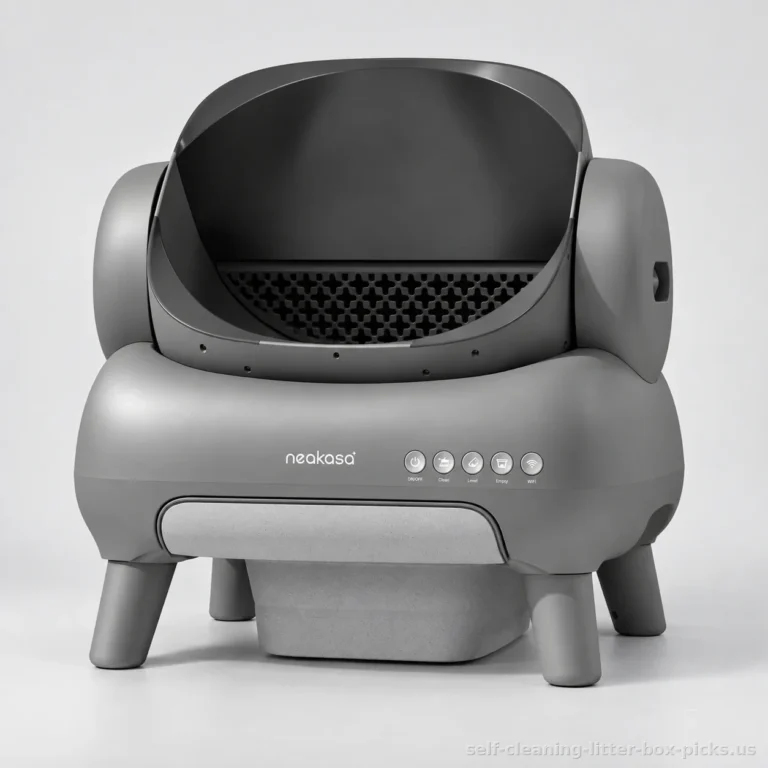
Best self cleaning litter box with a weight sensor 2026, picks and comparison
Best automatic litter box with a weight sensor does more than weigh your cat automatically: it builds a history for each cat, helping you spot a change before it becomes more serious. The buying guide below explains which criteria to compare.
Answer a few questions in 10 seconds4 questions about the 8 models in this selection
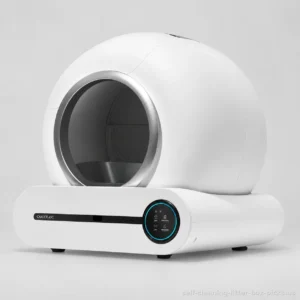
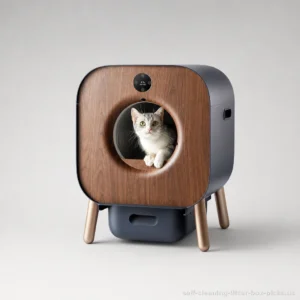
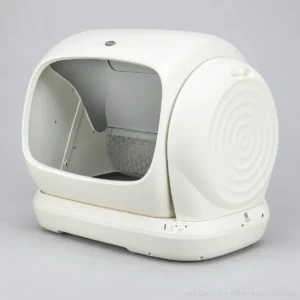
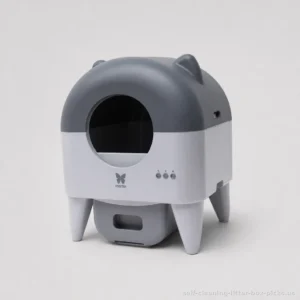
Prices collected from retailers are for guidance only: they may have changed since, the current price is the one shown by the retailer. No price is shown for models sold only on Amazon. Amounts converted from reference prices in euros using a dated exchange rate.
Our selection criteria
- 8 models shortlisted because they have the feature “Weight sensor” according to data published by manufacturers and retailers.
- See how we rank →
- No brand pays to be included in this selection or to rank higher.
Why choose an automatic litter box with a weight sensor?
Why weight tracking makes a difference compared with a conventional litter box
A standard automatic litter box takes care of cleaning. An automatic litter box with a weight sensor goes further: it weighs your cat on every visit and builds a history. The benefit is not just convenience, but early detection of a change in weight or fewer visits, 2 signs that owners often notice too late through observation alone. This tracking remains an everyday alert tool, not a diagnosis: any detected change must always be confirmed by a vet, never interpreted on its own.
How a weight sensor makes life easier with several cats
In a multi-cat household, the sensor also helps tell the cats apart, using their weight rather than a microchip or a collar worn at all times. Each cat gets a separate history in the app, making it possible to spot when an individual cat changes its behaviour. The limitation is well known: when 2 cats weigh almost the same, automatic identification becomes less reliable and some visits may be attributed to the wrong cat. This is worth bearing in mind before choosing a litter box for a household with several cats of similar size.
How much time does it actually save each day
The most immediate benefit is practical: the cleaning cycle starts automatically after each detected visit, significantly reducing daily manual work. The inner tray, waste container and sensor itself still need regular maintenance, otherwise measurement accuracy may deteriorate over time. An automatic litter box with a weight sensor reduces the mental load, but does not eliminate maintenance entirely.
Which cats really benefit from this type of equipment
This type of equipment is particularly useful for senior cats or those already under veterinary care, whose weight changes need to be spotted quickly, as well as multi-cat households that want to track each animal's behaviour separately. Conversely, a cat that is easily stressed by an enclosed, noisy mechanism may adapt better to an automatic litter box with an open tray, which is less intimidating but offers the same connectivity on some models. The budget needed varies considerably with the level of tracking offered: entry-level models often provide only basic weighing, while high-end models add detailed health tracking, a more comprehensive app and dedicated consumables.
The question remains which models actually live up to these promises when their technical specifications are scrutinised. For each selected model, the selection below details the sensor's stated accuracy, the tray capacity and the points to watch before buying.
How to choose the right automatic litter box with a weight sensor
The weight sensor is more than a marketing gimmick: it turns an automatic litter box into a health monitoring tool. But not all automatic litter boxes use this data in the same way, and some technical criteria carry more weight than others when choosing one.
How the sensor works and how accurate it is
The principle is the same on most models: built-in scales weigh the cat each time it enters the box, then link that measurement to an individual profile. According to the information manufacturers generally publish, the margin of error can vary between models, especially if the amount of litter changes between 2 weighings or the unit is not completely stable and level. A weight sensor shows a trend, not a diagnosis: an occasional fluctuation of a few hundred grams is no cause for alarm; what matters is the trend over several weeks.
What litter box capacity suits the number and size of your cats
The capacity of the box directly affects monitoring reliability. A box that is too small gets dirty quickly, which distorts weight readings and triggers more cleaning alerts. For a large cat, it is better to choose an XXL automatic litter box or an automatic litter box for large cats, designed to provide enough room to turn around without touching the sides. In a household with several cats, capacity must also accommodate use between 2 emptyings: beyond a certain number of cats, 2 separate boxes often make more sense than a single overloaded unit, if only to avoid territorial disputes that also disrupt measurements.
Which types of litter are compatible with the sensor
The weight sensor works best when the litter bed is stable and uniform. Most manufacturers recommend clumping litter, which forms clumps that are easy to separate during automatic sifting. Silica litter and some mineral litters that crumble very easily are sometimes discouraged, as they can interfere with the separation mechanism or slightly distort the weight of the litter remaining in the box. Before buying, it is better to check the stated compatibility than to stick with your usual litter.
What to check in the app and its data tracking features
The app is the essential companion to the weight sensor: it turns a raw measurement into a useful history. There are specific points to check before buying: a history of weight and visit frequency spanning several weeks, the ability to export or share this data with a vet, and how the unit behaves if the Wi-Fi connection drops. An automatic litter box that relies on the network must still be able to operate mechanically without a connection, even if it has to synchronise the data later.
What safety, noise levels and maintenance mean in everyday use
Safety deserves particular attention whenever a cat shares its space with a motorised mechanism. An anti-pinch sensor and an emergency stop when an obstruction is detected are features that should never be overlooked, especially with a curious cat or a kitten. Noise levels affect whether the cat accepts the unit: a motor that is too loud during rotation or sifting can discourage a stressed cat from using the box. Finally, maintenance involves more than just the box: the sensor itself must be cleaned regularly to prevent weight readings from gradually drifting.
What budget to plan for each range
Market positioning generally reflects the sophistication of the sensor and its companion app. Entry-level models usually offer basic weighing without a detailed history, mid-range models add proper tracking in the app with alerts, and high-end models include more advanced health monitoring, sometimes tied to specific consumables. A budget automatic litter box is not necessarily a poor choice if weight tracking is a secondary concern, but it often limits the accuracy and detail of the available data.
| Criterion | What to look for | Common mistake |
|---|---|---|
| Sensor accuracy | Tracking trends over several weeks, rather than a single reading | Panicking over a one-off change without checking the history |
| Tray capacity | A capacity suited to the size and number of cats | Choosing a tray that is too small for a large cat |
| Litter compatibility | A clumping litter recommended by the manufacturer | Using silica litter that is not suitable for the device |
| App monitoring | A history that can be exported and shared | Settling for a simple notification without actionable data |
| Safety and noise | Anti-pinch sensor and quiet operation | Overlooking noise levels with an already nervous cat |
| Maintenance | Regular cleaning of the tray AND the sensor | Forgetting the sensor, leading to inaccurate readings over time |
Mistakes to avoid
- Relying solely on the presence of a weight sensor without checking the manufacturer's stated margin of error
- Choosing a tray capacity that is too small for the cat's actual size, especially for larger cats
- Ignoring whether the litter used is compatible with the automatic mechanism
- Overlooking how the device behaves if the network connection drops
- Underestimating noise levels for a cat already sensitive to mechanical sounds
- Forgetting that the sensor itself needs regular maintenance to remain reliable
Key takeaways
When choosing an automatic litter box with a weight sensor, prioritise its ability to provide reliable monitoring over time, rather than simply the presence of a sensor. Tray capacity, compatibility with the litter used, app features and mechanical safety matter just as much as the stated accuracy. When comparing a conventional automatic litter box with a sensor-equipped model, the real benefit emerges over time: spotting an unusual weight change before it becomes a visible health problem.
What to know before choosing an automatic litter box with a weight sensor
How does the weight sensor in an automatic litter box work?
The sensor weighs the cat each time it steps onto the platform, before and after use, then records the difference in the app linked to the connected automatic litter box. According to manufacturer data, this measurement is only indicative: it depends on the appliance's stability, the litter level and how still the cat stays during weighing.
Is an automatic litter box with a weight sensor suitable for a multi-cat household?
Yes, provided the cats' weights differ enough for weight-based identification to work properly. When 2 animals have a similar weight, the app may mix up their records. With more than 2 or 3 cats, it is still best to provide a second litter box to reduce waiting times and wear.
Is the weight sensor reliable for monitoring my cat's health?
Its main purpose is to identify a trend: gradual weight loss or gain, or less frequent visits. It is not a medical device and does not replace an accurate weigh-in at the vet's. If the app flags an alert or repeated irregularities, a veterinary consultation remains the only way to confirm a problem.
What litter should I use in an automatic litter box with a weight sensor?
Most manufacturers recommend clumping litter with fine granules that sift easily during the cleaning cycle. Silica litter and some very lightweight mineral litters are sometimes discouraged, as they can distort sensor readings or sift poorly. It is worth checking the compatibility information in the manual before buying.
Is an automatic litter box with a weight sensor noisy?
The noise level mainly depends on the rotating or sifting mechanism, which activates after each visit. Some models offer a quiet mode or a delay to avoid frightening a timid cat. Feedback generally describes moderate noise, comparable to a small electric motor, but noticeable at night in a closed room.
What should I do if my cat is afraid of the automatic litter box?
It is advisable to introduce the appliance in manual mode or switched off for a few days, giving the cat time to get used to its presence and shape. Keeping the old litter box nearby during the transition also helps. Cats already stressed by mechanical noises may need a model with a particularly quiet cleaning cycle.
How much time does an automatic litter box need for maintenance each week?
Beyond the automatic cycle, you need to empty the waste compartment regularly and clean the weight sensor itself, which can lose accuracy if it gets dirty or litter builds up on it. Thorough maintenance, including cleaning the inner tray, generally takes a few minutes per week, depending on the number of cats and the type of litter used.
What budget should I plan for an automatic litter box with a reliable weight sensor?
Entry-level models offer a basic sensor and a simplified app, while mid-range models add more comprehensive weight tracking and customisable alerts. High-end models, often positioned as an alternative to an XXL automatic litter box, focus on advanced health monitoring and dedicated consumables, which also affect long-term running costs.