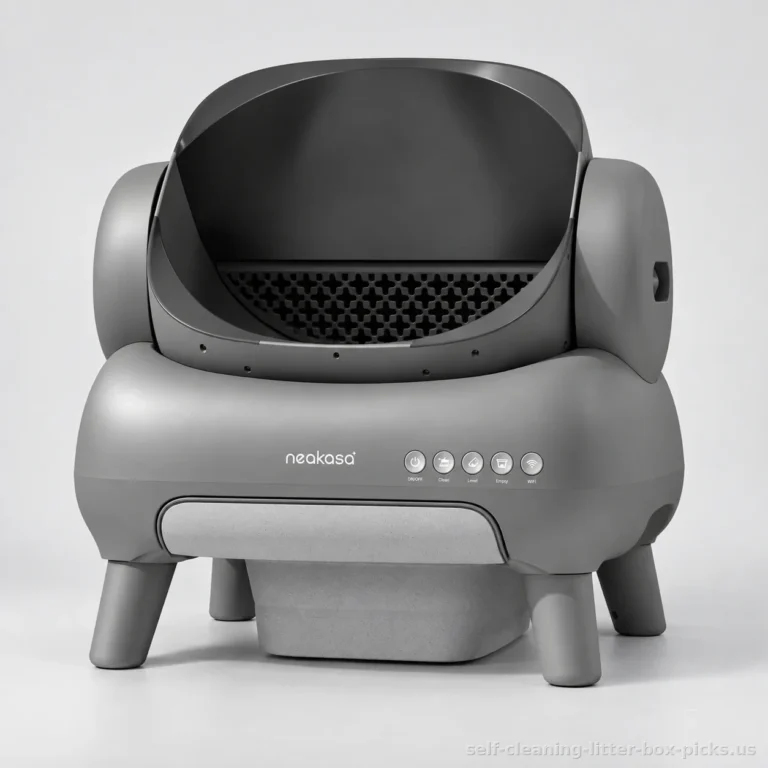
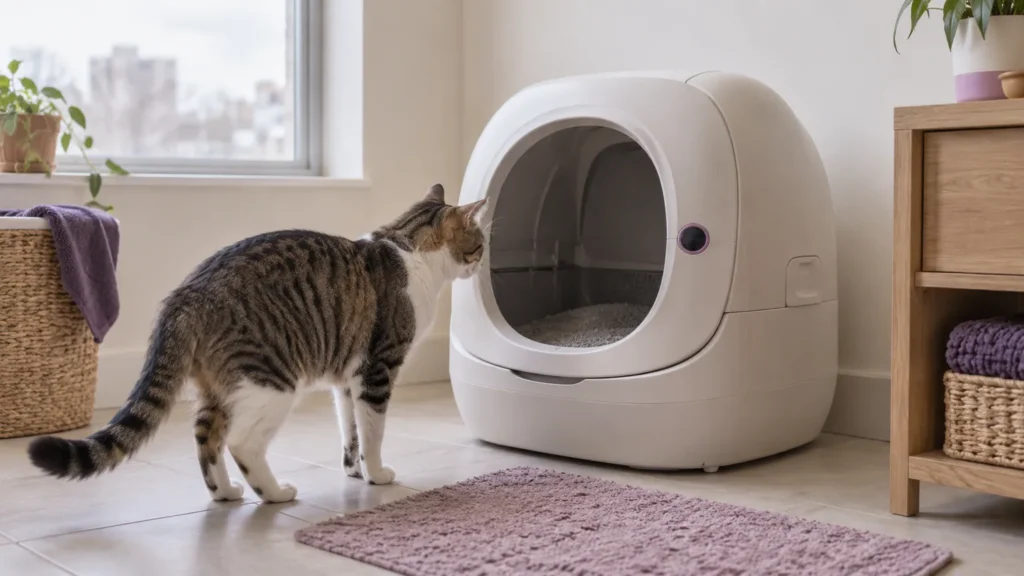
Best self cleaning litter box with an infrared sensor 2026, picks and comparison
Checking sensor sensitivity before buying helps prevent false triggers: a Best automatic litter box with an infrared sensor prevents the cycle from starting while a cat is still detected in the tray, keeping your cat safe every day.

Prices collected from retailers are for guidance only: they may have changed since, the current price is the one shown by the retailer. No price is shown for models sold only on Amazon. Amounts converted from reference prices in euros using a dated exchange rate.
Our selection criteria
- 2 models shortlisted because they have the feature “Infrared sensor” according to data published by manufacturers and retailers.
- See how we rank →
- No brand pays to be included in this selection or to rank higher.
Why choose an automatic litter box with an infrared sensor?
An automatic litter box with an infrared sensor primarily appeals to households that want to minimise scooping and handling litter bags without compromising their cat's safety during the cleaning cycle. Understanding exactly what this sensor does helps you decide whether this type of product really fits your daily routine, even before comparing models.
How does an infrared sensor work in an automatic litter box
The infrared sensor detects presence by emitting and receiving an invisible beam that scans the litter box area. While the cat is inside, the beam is interrupted and the system prevents the cleaning cycle from starting. Only once the cat has left, and after a programmed safety delay, does the raking arm or rotating drum start separating waste from clean litter. This motion detection approach differs from a simple timer: it triggers cleaning based on the animal's actual presence rather than a fixed schedule.
How this sensor improves safety and reduces daily upkeep
This mechanism has a direct impact in 2 areas. First, safety: by consistently delaying the cycle while a presence is detected, the infrared sensor greatly reduces the risk of entrapment, particularly for kittens or cats that like to linger in the box. Next, automatic operation: because cleaning starts automatically after each visit, you no longer need to monitor when the box is used or start the cycle manually. For a household where everyone is out during the day, this means a consistently clean box without intervention, a key consideration for anyone thinking about an automatic litter box rather than a conventional model.
How do infrared, weight and pressure sensors compare for reliability
Manufacturers use several detection technologies, and their effectiveness varies with the cat's size and build. An infrared sensor detects a physical presence in the beam, which generally makes it reliable even with a lightweight cat or kitten, whereas a weight or pressure sensor may lack sensitivity for smaller animals. Conversely, a weight sensor sometimes enables additional features, such as tracking the animal's weight at each visit. The choice between these technologies therefore depends as much on the number of cats in the household as on their build, something to check before choosing between an automatic litter box with an infrared sensor and an automatic litter box with a weight sensor.
Which households benefit most from this type of litter box
This type of self-cleaning litter box makes particular sense in certain situations:
- Multi-cat households, where frequent visits make manual cleaning a chore several times a day
- Owners who are away for much of the day and want to keep the litter box consistently clean
- Older or senior cats, which are often sensitive to odours and litter box comfort
- Households looking to reduce direct contact with waste and repeated handling
In terms of budget, this category broadly ranges from entry-level models with simpler mechanisms to high-end options featuring a connected app, notifications and multiple sensors, with mid-range models remaining the most common choice for family households. The following selection details infrared sensor models analysed against these criteria to help you identify the best fit for your household and your cats.
How do you choose the right automatic litter box with an infrared sensor?
The infrared sensor is just one component among many. When choosing a model that truly suits your cat and your home, several technical criteria matter far more than the brand name or the casing design.
Which technical criteria should you check before buying
Before comparing models, 4 factors deserve particular attention:
- Sensor sensitivity: an overly sensitive sensor triggers at the slightest nearby movement, while a sensor that is not sensitive enough may fail to detect a motionless or very lightweight cat.
- The cleaning delay: the waiting time between your cat leaving and the cleaning cycle starting. If the delay is too short, the machine may restart while your cat is still lingering near the tray.
- Waste compartment capacity: this determines how often it needs emptying, a factor that is often underestimated when buying.
- The stated noise level: according to manufacturer specifications, this varies considerably between models and affects suitability for use at night or in a studio flat.
How to choose based on the number and size of your cats
The minimum weight detected by the sensor is crucial for a kitten or a small cat: if the threshold is too high, the device may fail to register their presence and start a cycle while they are still on the platform. For a household with several cats, however, platform size and the required emptying frequency deserve closer attention, as the waste compartment fills up faster. Households with larger cats should lean towards an automatic litter box XXL, designed with a wider platform and a reinforced waste compartment.
Which mistakes should you avoid when buying
- Underestimating the space needed around the device, as most models require clearance for the rotating arm or waste drawer.
- Ignoring compatibility with the litter you already use: some sensors and mechanisms struggle with litter that is too fine, too heavy or of a particular clumping type.
- Overlooking motor noise, especially if the device will be kept in a living room or bedroom.
- Choosing solely because a model has a connected app, without checking the reliability of the sensor itself.
Connected apps and everyday maintenance
A mobile app makes it easier to track visits and manage maintenance, but it does not replace regular sensor checks. 3 points consistently recur in aggregated feedback: full waste compartment notifications, periodic cleaning of the infrared sensor lens to prevent false detections caused by dust, and replacement of consumables such as bags or carbon filters. Poor maintenance can reduce detection reliability over the weeks, regardless of the device's initial quality.
What budget should you plan for each product tier
Without assigning a specific amount to a model, this segment generally falls into 3 product tiers:
| Product tier | What you typically get |
|---|---|
| Entry level | Basic infrared sensor, limited waste compartment capacity, limited or no connected app functionality. An affordable automatic litter box remains a reasonable option for a household with a single cat and light use. |
| Mid-range | More reliable sensor, connected app with notifications, larger tray suitable for a household with 2 cats. |
| High-end | Combination of sensors (often infrared and weight), health monitoring via the app, more durable materials and lower noise levels according to manufacturer data. |
To choose between 2 technological approaches, it is also useful to compare an automatic litter box with a weight sensor and an infrared model: the former measures mass, the latter detects presence, and the 2 are sometimes combined in the most advanced models.
What manufacturers actually claim about safety and warranties
Manufacturers highlight anti-pinch mechanisms and redundant safety sensors on their latest models, according to their own technical specifications. It is still worth checking whether these mechanisms are documented in detail (number of sensors, detection area covered) rather than simply mentioned as a marketing claim. A clear manufacturer warranty, with explicit return conditions, complements these safety features.
Key takeaways
An infrared sensor should not be judged in isolation: its sensitivity, response time and maintenance matter as much as its presence. Choosing the right model depends mainly on the cat's size, the number of pets in the household and the type of litter used. Before comparing prices, it is best to check each of these technical criteria, then decide between the different product tiers.
What cat owners ask most often
How does the infrared sensor in an automatic litter box work
The infrared sensor detects the cat's presence in the litter box using an invisible beam positioned around or above the platform. While this beam is interrupted, the cleaning cycle remains blocked. It only starts after a set delay once the cat has left, allowing lingering odours to dissipate before raking begins.
Is an automatic litter box with an infrared sensor really safe for cats
According to manufacturer specifications for models with this feature, the infrared sensor is designed specifically for safety: it prevents any movement of the rake or drum while a presence is detected in the area. This greatly reduces the risk of entrapment compared with a mechanism without detection. Caution is still needed with a very light kitten or an older cat that barely moves.
Which automatic litter box should you choose for multiple cats
For a household with multiple cats, prioritise a large waste compartment and a wide platform suitable for larger cats. Expect to empty it more frequently as it will be used more often. An XXL automatic litter box or an automatic litter box for large cats is more suitable than a compact model designed for a single cat.
How long does the automatic cleaning cycle take
The duration varies by model, but the cycle always starts after a waiting period once the cat has left, allowing the infrared sensor to confirm that there is no movement. Raking and separating waste into the collection compartment then take a few tens of seconds. This delayed operation matters more to everyday convenience than sheer speed.
What maintenance does an automatic litter box with an infrared sensor need
The sensor itself needs regular dusting, as scattered litter or accumulated dust can interfere with detection and cause stoppages or false triggers. The waste compartment needs emptying according to how often it is used, and the drum or platform needs periodic cleaning with water to limit odours and prevent residue from sticking.
Can you use any type of litter in an automatic litter box with an infrared sensor
No, compatibility depends on the model's sifting mechanism. Most automatic litter boxes are designed for fine clumping litter, which separates easily during raking. Litter that is too coarse or does not clump can reduce sifting efficiency and cause dirt to build up faster on the sensors, including the infrared sensor.
What should you do if the infrared sensor does not detect your cat
Start by checking that the sensor is not obstructed by accumulated dust, litter or hair, the most common cause of detection problems. Also make sure your cat weighs enough to trigger detection, as some models have a minimum weight threshold. If the problem persists, thoroughly cleaning the sensor and restarting the device will resolve most cases.
Should you choose an automatic litter box with an infrared sensor or a weight sensor
An infrared sensor detects a presence using a beam, while a weight sensor measures weight on the platform. The former responds faster but can be sensitive to dust, while the latter copes better with dirt but requires a minimum weight to trigger detection. The choice mainly depends on your cat's size and the surroundings, with similar trade-offs to those involved in choosing an automatic litter box with a weight sensor.