Glossary of automatic litter boxes
All the technical terms used in our product guides and filters, explained in one sentence. We use the same terminology across the site: if a word trips you up while filtering automatic litter boxes, you'll find its definition here.
- Litter box type
- Cat size
- Size
- Cat monitoring
- Safety features
- Waste management
- Condition
- Odour control system
- Backup battery
- Maintenance and removable parts
Litter box type
The design of the litter area affects how easily your cat can enter, how exposed it feels, and how well litter stays inside.
- Open
- An uncovered litter area gives your cat a clear view of its surroundings and leaves the litter bed easy to access.
- Semi-enclosed
- A partially covered litter area offers some shelter while leaving part of the space open to the room.
- Enclosed
- A covered litter area surrounds your cat during use, offering privacy while making entry space and room to turn important.
Cat size
Matching the litter box to your cat's body size helps ensure it can enter, turn around, and squat comfortably.
- Small cat
- Intended for cats with smaller bodies, though safe automatic operation also depends on the device's weight and age requirements.
- Medium cat
- Intended for cats with an average build, with enough interior room still needed for your cat to turn and squat comfortably.
- Large cat
- Intended for cats with bigger bodies, which need enough entry clearance and interior space to turn and squat comfortably.
Size
The overall dimensions affect where the device fits in your home and how much space you need to access it for cleaning.
- Standard
- Indicates the regular size within a product range, so actual dimensions still need checking against your space and your cat.
- XXL
- Indicates an oversized format that may offer more room for your cat but also require more floor space.
Cat monitoring
Recorded litter box activity helps you notice changes in your cat's habits that may deserve closer attention.
- Weight tracking
- Records your cat's weight over time to help you notice changes that may otherwise be hard to spot.
- Visit counter
- Counts litter box visits to help you notice when your cat starts using the box more or less often.
- Visit duration tracking
- Records how long your cat spends in the litter box so you can spot changes in its usual bathroom habits.
- Multi-cat identification
- Attempts to distinguish cats sharing the box so recorded activity can be assigned to each cat separately.
Safety features
Protective functions help reduce the risk of injury when your cat approaches or uses the device's moving parts.
- Presence detection
- Detects a cat in or near the litter area so the device can delay or interrupt cleaning while the cat is present.
- Weight sensor
- Senses added weight in the litter area to help the device recognize when a cat is inside and avoid starting a cleaning cycle.
- Infrared sensor
- Uses infrared light to detect a cat or an obstruction so the device can respond before or during cleaning.
- Automatic stop when a cat is detected
- Stops the cleaning mechanism when a cat is detected to help prevent contact with moving parts.
- Anti-pinch protection
- Detects obstructions or limits moving parts to help prevent a paw or tail from getting trapped during cleaning.
Waste management
How waste is collected and removed affects how much handling, cleanup, and replacement material you need.
- Removable waste bin
- A container you can take out to empty collected waste and clean before putting it back.
- Disposable waste bin
- A waste container designed to be discarded and replaced when full, reducing the need to wash it.
- Automatic waste bagging
- A mechanism puts collected waste into bags automatically, reducing manual handling during disposal.
Condition
The unit's prior use and preparation for resale affect expected wear and what to check before buying.
- New
- A unit sold without prior consumer use, so normal wear from a previous owner's cat is not expected.
- Used
- A previously owned and operated unit whose wear and cleanliness should be checked before purchase.
- Refurbished
- A previously owned or returned unit prepared for resale through inspection and any needed cleaning or repairs.
Odour control system
The method used to limit smells affects how much odor escapes and what upkeep or supplies are needed.
- Carbon filter
- A carbon-based filter traps odor molecules from collected waste and needs periodic replacement to remain effective.
- Automatic deodorising spray
- A device releases deodorizing spray automatically to reduce waste smells and requires refills.
- Airtight waste compartment
- A sealed waste compartment limits the escape of smells while closed, helping contain odors between emptying.
Backup battery
Support for a backup battery determines whether the litter box can keep operating when household power is interrupted.
- Included
- A backup battery comes with the litter box to supply power when household electricity is interrupted.
- Optional
- A compatible backup battery can be purchased separately to supply power during an outage.
- Not compatible
- The litter box does not support a backup battery, so this accessory cannot keep it running during an outage.
Maintenance and removable parts
How easily parts can be accessed and removed affects the effort needed for cleaning, upkeep, and replacement.
- Detachable globe
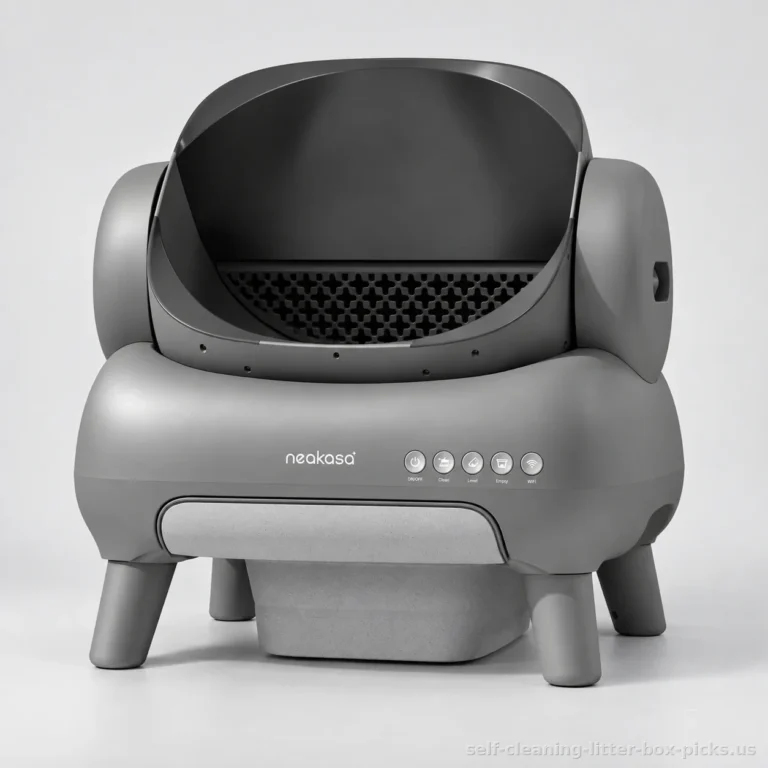
- The rounded litter chamber can be removed from the base, making its interior easier to reach for cleaning.
- Removable sieve
- The screen that separates waste clumps from loose litter can be taken out to clear buildup and wash it.
- Replaceable litter tray
- The tray that holds the litter can be replaced when worn or damaged, helping keep the rest of the unit in use.